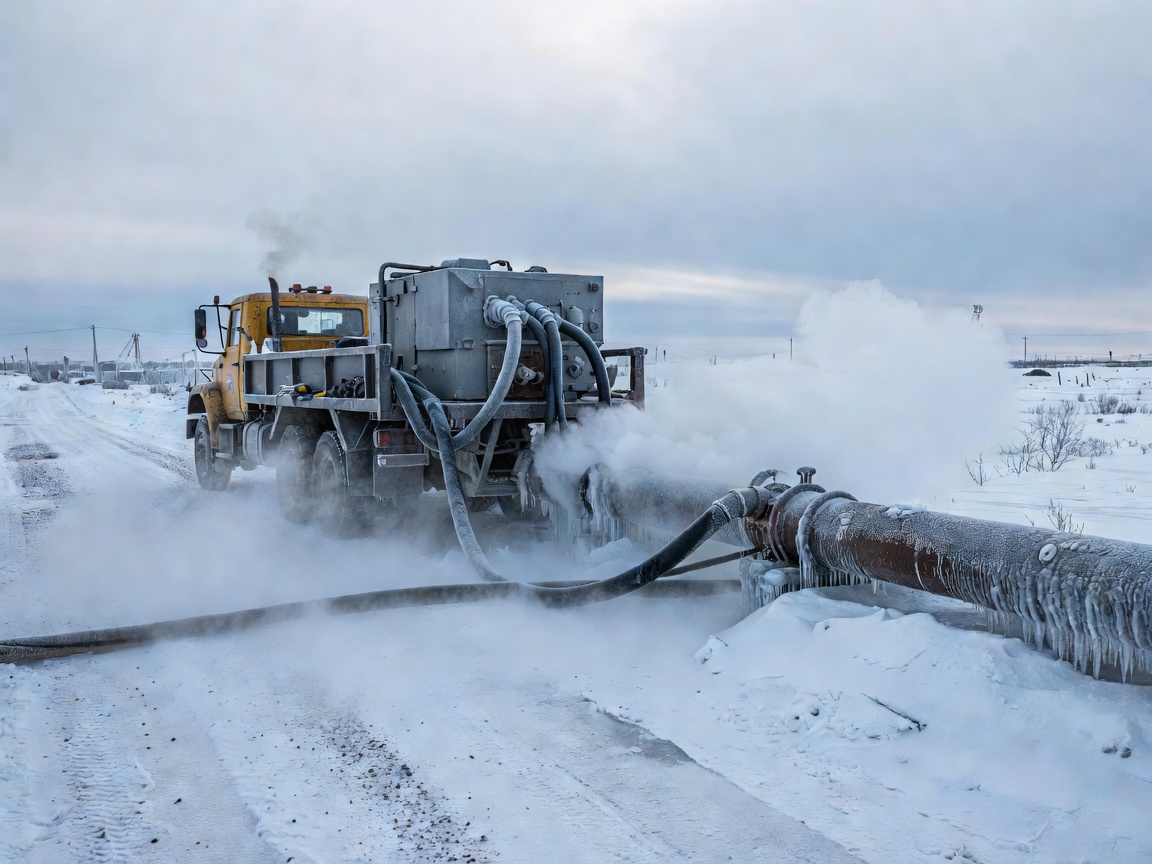
The Physics of Extreme Winter Pipe Freezing in Finland
When ambient temperatures throughout the Finnish winter plummet past -15°C, frost heave and cold air convection into unheated basement foundations (ryömintätila) cause catastrophic water line freezing. When water transforms into ice, it expands by approximately 9% in volume. This volumetric expansion creates hydraulic pressure upwards of 2,000 bar inside closed pipe segments—far exceeding the yield strength of copper (40 bar nominal) or composite PEX pipes.
Traditional DIY methods such as blowtorches, heat guns, or uncontrolled space heaters often ignite timber wall framing or cause sudden thermal shock, cracking the embrittled metal and flooding the property immediately upon thawing. Gridsbrowselb utilizes controlled, calibrated industrial thermal protocols to safely restore flow.
Our Controlled De-Icing Technologies
1. Low-Voltage High-Current Electro-Induction
For metallic piping networks (copper, ductile iron, galvanized steel), our emergency response units connect heavy-duty electrical leads to both ends of the frozen segment. A high-amperage, ultra-safe low-voltage current (typically 12V to 24V at 300–600 Amps) is driven through the pipe walls. The electrical resistance of the pipe material generates uniform, gentle ohmic heat along the entire interior circumference, melting the ice collar in contact with the inner pipe wall within 8 to 20 minutes without hot spots.
2. Micro-Bore Steam Jet Injection (For Plastic / PEX Lines)
Because cross-linked polyethylene (PEX) and high-density polyethylene (HDPE) do not conduct electricity, electro-thawing cannot be applied. For plastic pipes, our teams deploy pressurized micro-hose steam injectors (Höyrysulatus). A flexible 4mm nylon lance delivering dry, low-pressure steam (110°C at 2.5 bar) is advanced through the open valve directly against the ice plug, liquefying it at an advancement rate of 1 meter per minute without melting or deforming the plastic wall.
Comparative Analysis: Electro vs. Steam Thawing
| Parameter | Electro-Thermal Induction | Micro-Bore Steam Injection |
|---|---|---|
| Compatible Pipe Types | Copper, Cast Iron, Steel, Lead | PEX, Composite, HDPE, PVC |
| Access Requirements | Two exposed grounding points | One disassembled valve or union |
| Average Thaw Speed | 15 - 30 minutes total run | 0.8 to 1.5 meters per minute |
| Burst Protection Level | Continuous thermal imaging monitored | Pressure relief bypass valve fitted |
Step-by-Step Emergency Response Protocol
- Immediate Isolation: The main property water meter intake valve is closed to prevent uncontrollable flooding once the ice obstruction clears.
- Thermal Diagnostic Profiling: Our technicians use FLIR thermal imaging cameras to locate the exact coordinate of the ice boundary within wall cavities or sub-floors.
- De-Icing Machine Connection: Ground clamps or steam guidance probes are secured with strict Tukes electrical safety certification.
- Supervised Pressure Relief: Downstream faucets are opened to bleed steam pressure and allow water to flow freely the moment hydraulic passage is re-established.
- Ultrasonic Leak Verification: Once thawed, the system is subjected to a 10-bar hydrostatic pressure test to confirm no microscopic fractures occurred during the freeze.